
What Can Facial Acupuncture Realistically Do for Your Skin?
Does Facial Gua Sha Really Lift and Shape Your Face
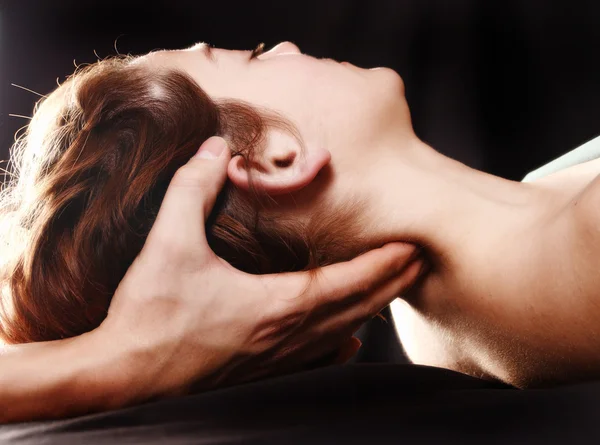
How Traditional Chinese Medicine Understands and Supports Insomnia and Sleep Problems
A Western doctor usually gives poor sleep one name. Insomnia. The next step is often sleep hygiene advice, therapy, or a sleep aid.
Traditional Chinese medicine sees the same sleepless nights differently. Two people who both lie awake at 3am may receive completely different plans, because TCM looks for the pattern behind the symptom. Below, you will find those patterns, what a TCM assessment involves, the treatments commonly combined, which Chinese herbs are used, and when poor sleep points to something wider.
Table of Contents
How TCM Understands the Root Causes of Insomnia
Insomnia in Chinese medicine is not a single label. It is a sign that something in the body’s balance has shifted, and the pattern tells the practitioner where.
| TCM pattern | How sleep is affected | Other common signs |
| Heart and kidney disharmony | Trouble staying asleep, frequent waking, restlessness in the early hours | Night sweats, hot palms and soles, tiredness |
| Liver qi stagnation | Racing thoughts, difficulty switching off, sleep easily disturbed | Irritability, headaches, a stressful routine |
| Heart and spleen blood deficiency | Light sleep, lots of dreams, waking early and struggling to fall back asleep | Overthinking, low energy, poor appetite, pale complexion |
Treatment follows the pattern. A person with liver qi stagnation needs calming and smoothing, while a person with blood deficiency needs nourishing. Give both the same approach and one of them is likely to feel no better.
What a TCM Insomnia Assessment Looks Like
Your practitioner starts with the pulse and tongue, then spends a good part of the consultation on your sleep history. Expect questions like these:
- Is the problem falling asleep, staying asleep, or waking too early?
- What time do you usually wake up, and can you fall back asleep?
- Do you dream a lot, and are the dreams disturbing?
- Do you feel hot, sweaty or restless at night?
- How are your digestion, stress levels and energy during the day?
The answers point to a pattern, and the pattern shapes the plan. A sleep aid works on the symptoms of the night. A pattern-based approach asks why the night went wrong in the first place.
A busy mind is not always the cause of poor sleep. Sometimes the bigger issue is a late, heavy dinner and a stomach still working at midnight. Details like that only come out in a proper consultation.
Treatments Commonly Combined for Sleep Problems
Most TCM plans for sleep problems combine three parts:
- Acupuncture to calm the nervous system and ease tension
- Herbal formulas matched to your pattern
- Lifestyle and diet adjustments, such as an earlier, lighter dinner, a wind-down routine, and foods suited to your constitution
The acupuncture side has growing research behind it. A 2025 systematic review and meta-analysis in Frontiers in Neurology, covering 10 randomised controlled trials and 757 patients, found acupuncture improved subjective sleep quality and insomnia severity scores compared with sham acupuncture. The effect on objective measures such as total sleep time was less certain.
How quickly sleep changes varies from person to person. Milder or stress-related cases may respond sooner, while longer-standing patterns usually need a longer course. The number of sessions is set after assessment, with progress reviewed along the way. Our page on TCM for insomnia and sleep disorders explains how these treatments are delivered at our centres.
When Insomnia Signals an Underlying Imbalance
Chronic insomnia is rarely only about sleep in TCM theory. Months of poor rest often point to a wider organ imbalance, and focusing only on getting one good night tends to bring short-lived results. A practitioner will usually look at digestion, stress, hormones and energy alongside sleep itself.
Some signs call for a medical check as well. See your doctor if you snore loudly or wake up gasping, if poor sleep comes with persistent low mood, or if pain or breathlessness keeps waking you. These can signal conditions that need Western medical care, and TCM can support you alongside it.
Poor sleep that has lasted longer than a few weeks, or that affects your work, mood or health, deserves an assessment. Contact our practitioners to find out which pattern is behind your restless nights.
Chinese Herbs Commonly Used for Sleep Problems
Chinese herbs for sleep are grouped by what they do. Two broad types come up most. Blood-nourishing formulas support people whose poor sleep comes from depletion, while shen-settling (calming) formulas help settle a restless, overactive mind.
Research on Chinese herbal medicine for sleep is encouraging. A 2025 network meta-analysis in the journal Medicine, drawing on 186 clinical trials of 13 herbal interventions, reported encouraging results for several Chinese herbal medicines on sleep quality scores. The authors rated the included studies at low-to-moderate risk of bias and still called for more high-quality trials.
Herbs are prescribed by pattern, not handed out as a generic sleep supplement. The formula that helps a stressed, wired sleeper can leave a depleted one feeling worse. If you already take sleep medication or other prescription drugs, tell both your doctor and your TCM practitioner before starting herbs. Our Chinese herbal medicine page explains how prescriptions are prepared and reviewed.
Getting Real Rest With a Pattern-Based TCM Approach
Chinese medicine for insomnia and TCM for sleep disorders work by addressing the underlying pattern, not only easing TCM sleep symptoms for one night. Traditional Chinese medicine insomnia care usually involves a course of sessions, with progress reviewed along the way.
Xi TCM Centre’s practitioners, registered with the T&CM Council under the T&CM Act 2016 (Act 775), assess before recommending acupuncture, herbs or lifestyle changes. Book an assessment with us to identify your sleep pattern and start a Chinese medicine for a sleep plan suited to you, or visit us to find your nearest branch.
This article is for general information only and does not replace advice from a registered medical practitioner.
References
Yu, Y., Li, X., Zhu, Z. et al. (2025). Acupuncture for chronic insomnia disorder. A systematic review with meta-analysis and trial sequential analysis. Frontiers in Neurology. Available at: https://www.frontiersin.org/journals/neurology/articles/10.3389/fneur.2025.1541276/full
Li, et al. (2025). Chinese herbal medicine for insomnia. A systematic review and network meta-analysis. Medicine. Available at: https://www.ovid.com/jnls/md-journal/fulltext/10.1097/md.0000000000043789